Search Warrants Used at Andrew Mountbatten-Windsor’s Homes Were Unlawful, Court Says
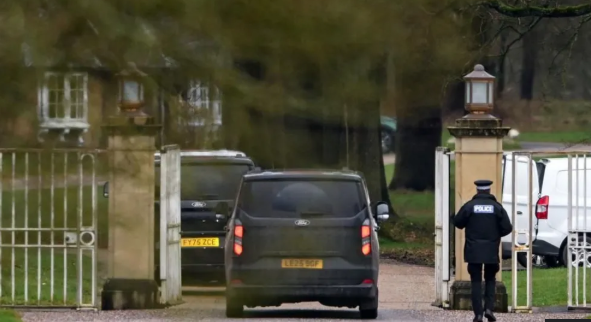
Thames Valley Police has acknowledged that search warrants used to raid Andrew Mountbatten-Windsor’s homes earlier this year were unlawful, according to a High Court hearing in the UK.
The former prince was arrested on Feb. 19 on suspicion of misconduct in public office. Police searched his properties and seized documents and electronic devices as part of an ongoing investigation.
A judge has now confirmed that the warrants were improperly issued. However, the ruling does not end the criminal investigation against Mountbatten-Windsor.
Why Were the Search Warrants Ruled Unlawful?
The legal dispute centers on which section of the UK’s Police and Criminal Evidence Act 1984, commonly known as PACE, should have been used to authorize the searches.
Thames Valley Police initially sought warrants under Sections 8 and 9 of the law. The Central Criminal Court ultimately issued the warrants under Section 8.
A subsequent legal challenge brought by Mountbatten-Windsor’s lawyers established that the warrants should have been issued under Section 9 instead.
At Thursday’s High Court hearing, Mr Justice Hilliard said both sides had agreed that the search warrants were unlawful.
However, the judge stressed that the decision does not invalidate the entire police investigation.
“The fact that the search warrants were quashed does not bring the investigation to an end or mean that the whole of the investigation is unlawful.”
Police Still Have the Seized Evidence
Although the warrants have been quashed, police have not been ordered to immediately return the material seized during the searches.
Mountbatten-Windsor is challenging the police’s efforts to retain the documents and electronic devices.
A further court hearing is expected in 2027 to determine whether police can legally keep and potentially use the seized material as part of their investigation.
The judge noted that there would be little point in returning the property if it could simply be lawfully seized again under another legal provision.
What Is the Investigation About?
The investigation concerns allegations of misconduct in public office.
Mountbatten-Windsor’s arrest followed the publication of documents by the U.S. Department of Justice that raised questions about whether he may have passed confidential information to convicted sex offender Jeffrey Epstein while serving as a UK trade envoy in 2010.
Mountbatten-Windsor has consistently denied wrongdoing connected to Epstein.
The current investigation remains ongoing.
Police Defend Their Actions
Thames Valley Police said the court’s decision concerned the specific legal basis used to authorize the warrants and was not a judgment on the police investigation itself.
The force said officers had provided the court with the information and paperwork needed to make its decision and maintained that it had followed the appropriate legal process.
However, police accepted that the original court decision to issue the warrants under the particular legal provision was incorrect.
The force said legal proceedings are now underway to determine how the seized material should be handled and whether it can lawfully be retained as part of the investigation.
What Happens Next?
The next stage of the legal dispute will focus on whether police can rely on alternative legal powers to retain the material.
UK law provides additional safeguards for certain sensitive materials, including communications between a suspect and their lawyer or confidential documents belonging to another party.
Police may be able to retain such material if they can satisfy additional legal requirements.
Thames Valley Police will need to persuade a judge that the seized material is likely to have “substantial value” to the investigation and could potentially be used as evidence in future court proceedings.
For now, the search warrants have been declared unlawful, but the investigation into Andrew Mountbatten-Windsor remains active.
The next major legal decision is expected in 2027, when the court considers whether police can continue to hold and use the material seized from his properties.
